
Controlled drinking often sounds like a clear plan: drink less, check liver test results, and that is it. But it is not that simple. GGT, GOT (AST) and GPT (ALT) provide important indications of strain on the liver, but they cannot reliably prove abstinence or genuinely moderate consumption.
Too many factors influence these values. Assessors therefore now rely on additional markers and continuous documentation. Here you can learn how to interpret liver tests correctly and which evidence really counts.
Key points at a glance
- Liver tests are relevant, but they do not reliably demonstrate abstinence or moderate consumption.
- GGT is sensitive to alcohol, but also to medication and illness; it is unreliable on its own.
- GOT (AST) and GPT (ALT) mainly indicate liver damage and are not specific to alcohol.
- Assessors require additional markers such as CDT, EtG in urine/hair or PEth, frequently over 3–6 months.
- Recommendation: have your GP check the values and provide written results, plan early and document tests regularly.
Are GGT, GOT (AST) and GPT (ALT) enough to prove abstinence or controlled drinking in the MPU?
No. Although liver values such as GGT, GOT (AST) and GPT (ALT) are relevant to controlled drinking, they are not sufficiently specific. Medication or illness can influence them. Assessors therefore usually accept them only as supporting indications. Robust evidence requires additional markers such as CDT, EtG or PEth and proper documentation.

Why liver tests still matter for controlled drinking
Liver tests are an important part of the overall picture. They show whether the liver is currently under strain. Alcohol may cause this, but there can also be other reasons. This is precisely why they are “relevant” to controlled drinking but not “proof”.
They help identify risks early and reveal concerning trends. For the MPU, they are primarily a supporting component. What matters is interpreting the values correctly without overestimating their significance.
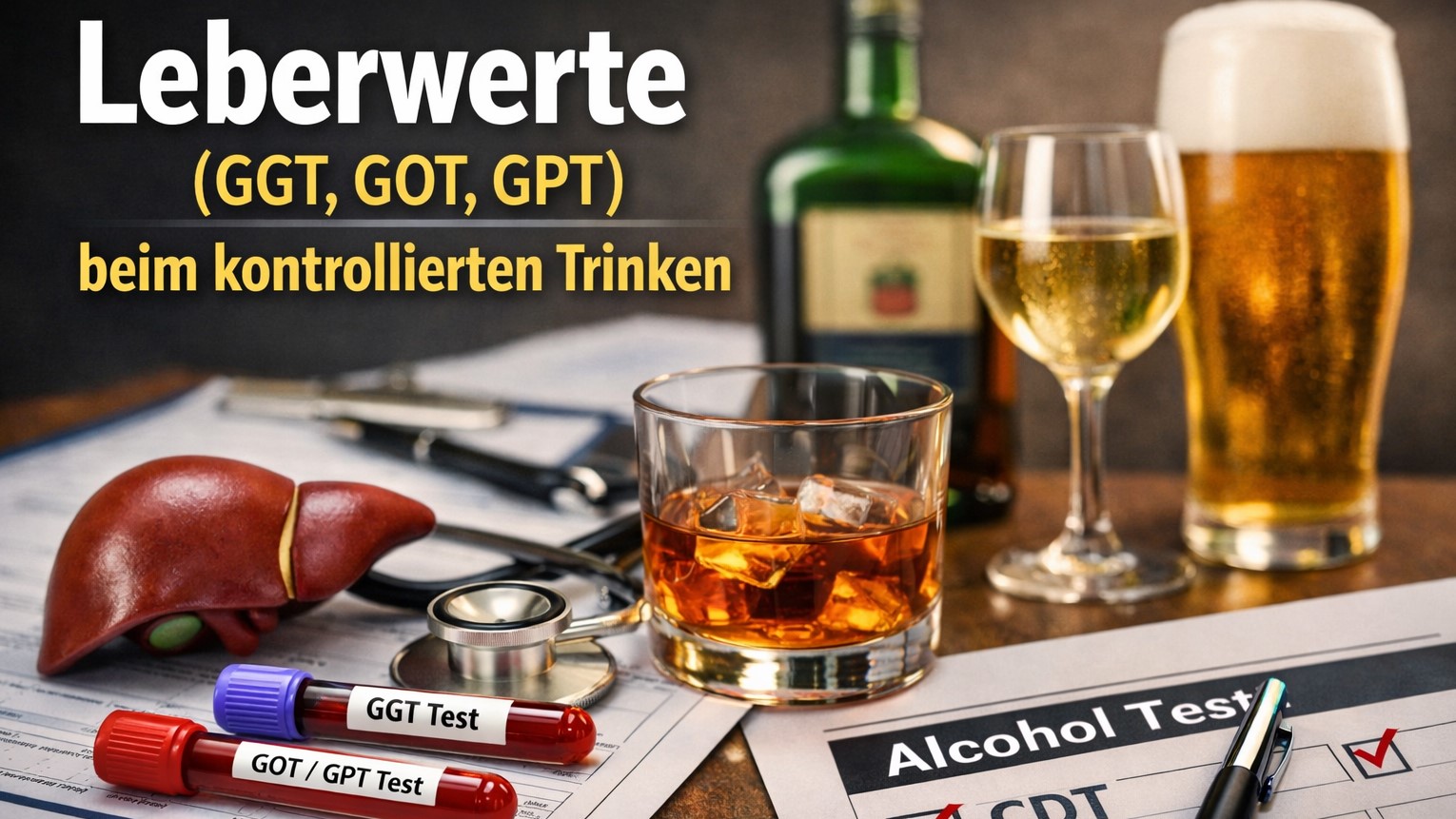
Interpreting liver values in alcohol-related assessments
| Value | What it typically indicates | Why its usefulness for alcohol-related questions is limited |
|---|---|---|
| GGT | Responds sensitively to strain | Can also rise because of medication or illness |
| GOT (AST) | Possible cell damage | Many influencing factors; not alcohol-specific |
| GPT (ALT) | Possible liver damage | Also non-specific and strongly influenced by other factors |
Understanding GGT: sensitive to alcohol but unreliable alone
GGT is considered a “sensitive” value in relation to alcohol, which is why it is frequently mentioned in this context. However, alcohol is not its only influence. Medication can also alter the value, as can illness and other sources of strain.
A normal value is therefore not reliable proof of abstinence, and an elevated value is not automatically proof of drinking. As a rough guide, normal GGT is often below 60 U/l in men and below 40 U/l in women. Nevertheless, the overall picture ultimately matters, not a single number.
A quick guide to GGT
| Group | Frequently cited guide for “normal” |
|---|---|
| Men | < 60 U/l |
| Women | < 40 U/l |
GOT (AST) and GPT (ALT): they indicate damage, not its cause
GOT (AST) and GPT (ALT) are often considered together as “liver values”. They may indicate liver damage, mainly addressing whether liver cells are under strain or damaged. This is important but not conclusive. Many factors can influence these values, and alcohol is only one. Exercise, medication and other illnesses can also play a role. GOT and GPT are therefore not specific to alcohol. For the MPU, this means they are at most part of the supporting case, never the sole evidence.
Why liver tests alone are no longer enough to prove abstinence or moderate consumption
Liver values were often given greater weight in the past. Today, the approach is stricter and clearer. Assessors know that values can fluctuate and that some people have unremarkable results despite drinking. Conversely, values can be elevated without alcohol.
This is precisely why GGT, GOT (AST) and GPT (ALT) alone are no longer sufficient. They provide only indirect indications. Abstinence or moderate consumption requires markers more directly linked to alcohol itself. Stable, clearly documented behaviour also matters. Liver values therefore remain “supportive”, not “decisive”.
Additional markers: CDT, EtG and PEth as assessment standards
Other markers come into play when robust evidence is required, particularly CDT, EtG in urine/hair and PEth. These are considered significantly more informative than liver values alone, so assessors frequently request them as additional evidence.
A period of 3–6 months is often relevant, particularly when evidence of stability is expected. The combination of method and documentation also matters. EtG can be measured in urine or hair, depending on the sample, while PEth is used as an additional marker when a clearer picture is needed.
Comparison: liver values versus additional alcohol markers in MPU practice
| Category | Examples | Role in the MPU |
|---|---|---|
| Liver values — supporting | GGT, GOT (AST), GPT (ALT) | Indications of strain, but not proof |
| Additional markers — frequently required | CDT, EtG in urine/hair, PEth | Often decisive for evidence, frequently over 3–6 months |
Putting the recommendation into practice: doctor, documents, timing and a clear evidence strategy
Start with a GP appointment to have your values checked. Obtain everything in writing. This creates clarity later and prevents misunderstandings. Plan well before the MPU. In practice, it is often recommended to avoid alcohol for 3–6 months before the MPU.
Combine this with a hair analysis for greater reliability if evidence of stability is required. If you want to demonstrate controlled drinking, document consistently and regularly. Repeated tests demonstrate stability and make your progress traceable. This brings your evidence closer to what assessors now expect.
PEth: the new gold standard alongside GGT, GOT and GPT
For controlled drinking, traditional liver values are often no longer enough to convince an assessor fully. Doctors increasingly request additional analysis of PEth, phosphatidylethanol.
Unlike standard liver enzymes, PEth is a direct alcohol marker formed only after ethanol consumption. It allows a precise retrospective view of drinking over the preceding weeks and can clearly distinguish moderate enjoyment from harmful misuse.
Anyone wanting greater certainty with controlled drinking should consider PEth values as additional evidence. This gives biological support to their account for the MPU assessor and minimises doubts about credibility.
Plausibility checks under the new CTU criteria
Since the introduction of the fourth edition of the assessment criteria, the role of liver values in controlled drinking has changed. Assessors primarily use GGT, GOT and GPT to check the plausibility of statements made during the psychological interview.
For example, if you describe very strict controlled drinking with minimal quantities but your liver values are near the upper limit, critical follow-up questions arise. The values must match your documented drinking diary precisely.
Considering blood results in isolation without reference to behavioural change rarely leads to success in modern MPU assessment. It is therefore essential to document trends over several months to demonstrate stable, credible change.
Dealing with non-specifically elevated values
Participants often ask whether slightly elevated liver values are sufficient. Because GGT, GOT and GPT can also rise due to medication, intensive exercise or an unhealthy diet, medical investigation is crucial.
If your values are outside the normal range despite controlled drinking, you need a medical certificate confirming non-alcohol-related causes such as non-alcoholic fatty liver disease (NAFLD). Without such documentation, the assessor will, in case of doubt, always assume concealed alcohol misuse.
Combining values within the normal range with complete medical documentation of any deviations is therefore the safest way to demonstrate medical suitability for the MPU.
Conclusion
Liver values are helpful, but not a free pass. Relying on GGT, GOT (AST) and GPT (ALT) risks uncomfortable questions during the MPU. Instead, plan thoroughly: have your GP document values regularly in writing, follow your drinking rules consistently and ideally avoid alcohol for 3–6 months before the assessment. Add alcohol-specific markers such as CDT, EtG or PEth. This creates a coherent overall picture, which convinces assessors and ultimately gives you real confidence for your fresh start.
Sources:
- Liver Values and the MPU – Important Information About Proof of Abstinence
- Liver Values in an Alcohol-Related MPU
- Laboratory Values in Alcoholism – LabNews
FAQ
Are normal liver values enough to pass the MPU?
Normal liver values are a basic prerequisite, but not sole proof of stable controlled drinking. The assessor primarily evaluates your psychological work and the credibility of your behavioural change.
Which liver value responds most sensitively to alcohol?
Gamma-GT (GGT) is considered the most sensitive marker of regular alcohol consumption. It often rises even with moderate amounts but can also be influenced by liver disease or medication.
What happens if my liver values are elevated despite controlled drinking?
You must have the cause investigated by a specialist and documented in writing. Without evidence of a non-alcohol-related cause, the assessor will interpret the elevation against you.
How long does it take for liver values to return to normal?
With healthy metabolism, elevated enzymes such as GOT and GPT often fall within one to two weeks after stopping alcohol. GGT usually takes considerably longer and often returns to normal only after two to four weeks of abstinence.
Is CDT important for controlled drinking?
Yes. CDT is a specific longer-term marker that reveals chronic misuse over the preceding two weeks. An unremarkable CDT result supports your claim to drink only small, controlled amounts.
Can I pass the MPU without liver test results?
Although liver tests are not formally mandatory for controlled drinking, presenting them is strongly recommended to support your statements biologically. The absence of blood results may raise doubts about your transparency.
Why is additional PEth testing now common?
PEth is a direct alcohol marker that, unlike GGT or GPT, is not distorted by other illnesses. It offers the greatest certainty when demonstrating actual consumption behaviour over a period of up to three weeks.
Is a drinking diary alone sufficient without liver values?
A drinking diary is an important aid for the psychological account, but it must be biologically plausible. Liver values provide a necessary objective comparison with the amounts recorded in the diary.
Can medication distort liver values for the MPU?
Yes. Many common medications can raise GGT, GOT or GPT. Give the assessor a list of your medication and ideally bring a medical certificate as well.
What is the difference between EtG and traditional liver values?
Liver values indicate only organ damage or liver responses, while EtG is a direct breakdown product of alcohol. EtG provides forensically reliable evidence of consumption in urine or hair; liver values are merely indicators.