
Alcohol screening as proof of abstinence becomes particularly important when an MPU is approaching or you want to regain your driving licence. The aim is to establish that no alcohol has been consumed. Testing frequently measures EtG (ethyl glucuronide), a specific alcohol breakdown product formed after consumption. Urine and hair analyses are the most common methods. Both have clear strengths but differ considerably in their detection periods, costs and organisational demands.
Key points
- EtG is the central marker for proof of abstinence because it is a specific alcohol breakdown product.
- Hair analysis typically covers three previous months per 3 cm of hair and is easy to schedule.
- Urine analysis usually detects consumption for only 3–5 days after the last drink and requires frequent short-notice appointments.
- Costs differ: hair is more expensive per test; urine is cheaper per test but needed more often.
- Hair often has advantages for the MPU because it is considered reliable, difficult to manipulate and requires few samples.
What is alcohol screening for proof of abstinence using EtG?
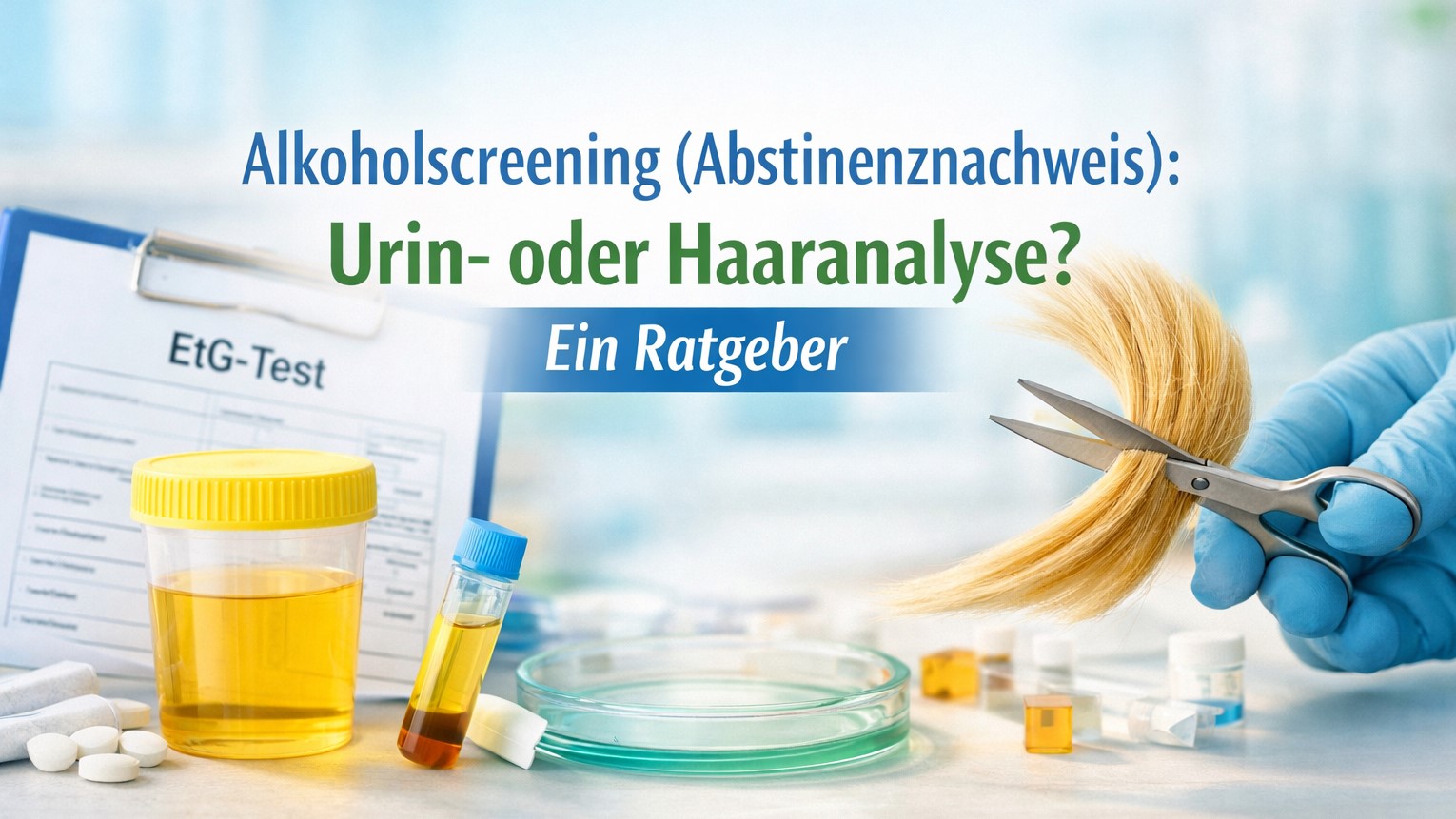
Alcohol screening provides proof of abstinence, mainly for the MPU or licence reinstatement. It establishes alcohol abstinence through EtG measured in urine or hair. Hair reflects longer periods measured in months; urine covers short periods measured in days and is therefore tested more frequently.
What exactly does alcohol screening establish?
Alcohol screening is about abstinence, rather than simply drinking somewhat less. It therefore often measures EtG (ethyl glucuronide), a specific alcohol breakdown product formed in the body after consumption.

This makes the marker particularly suitable when authorities or assessors require objective evidence. It also means a relapse may become visible in EtG results. The sample type determines which period can be covered.
That is why hair and urine are assessed differently. Understanding this helps you choose the method more effectively.
When is proof of abstinence relevant to the MPU or licence reinstatement?
Proof of abstinence is mainly required when preparing for an MPU or seeking licence reinstatement. In these cases, abstinence must be demonstrated, not merely claimed. A programme schedules samples over a defined period, which may be six months or longer depending on the requirements.
The procedure must remain traceable and documented. Planning, costs and practical demands therefore matter greatly. Many people struggle with everyday organisation rather than the test itself. Establishing a clear plan early reduces stress and mistakes.
EtG hair analysis: period, advantages and limitations
Hair analysis is popular because it can cover long periods, typically three previous months per 3 cm of hair. This makes appointments easier to plan. Another advantage is its resistance to manipulation.
Often only one or two samples per year are needed, reducing everyday demands. This is frequently described as ideal for the MPU because it provides evidence across a continuous period. However, the method has limitations: it is more expensive, usually around €250–€400 per test. Hair growth may also affect results, and the EtG threshold is frequently cited in the range of < 7–30 pg/mg.
EtG urine analysis: detection window, procedure and pitfalls
Urine analysis is an established method but works differently. It is a short-term test, because urinary EtG is generally detectable for only 3–5 days after the last consumption. Abstinence programmes therefore test more frequently, often four to six times per six months.
This makes the method cheaper per test, typically €30–€50 each. It is also suitable when hair is very short or hair analysis is impossible. However, the frequent short-notice checks create pressure.
This can cause stress at work and in private life. Urine is also considered easier to manipulate, for example through masking, so strict procedures matter. A threshold of < 0.1 mg/L EtG is frequently cited.
Hair versus urine: comparing costs, time and flexibility
A comparison should consider more than whether a method is cheap or expensive. The period covered, ease of scheduling and overall demands are decisive. Hair often feels less stressful because appointments can be planned and are infrequent.
Urine may be cheaper per appointment, but frequent and short-notice scheduling consumes time. Annual costs also vary considerably between programmes. The following overview summarises typical differences:
| Method | Period | Annual cost | Flexibility |
|---|---|---|---|
| Hair | 3 months | €500–€800 | High: can be scheduled |
| Urine | 3–5 days | €600–€1,200 | Low: short-notice appointments |
The table shows that hair is not automatically more expensive because fewer samples are usually required. Urine may ultimately cost more when many checks accumulate. Consider the full year and whether short-notice availability is realistic in your daily life. Realistic planning helps avoid programme termination.
Choosing the method that suits your situation
The best method is the one you can reliably complete. Hair analysis often suits people needing long-term evidence who prefer scheduled appointments. It also makes sense if you want to provide as few samples as possible.
Urine is often an option if your budget is limited or you only need to cover a limited period. However, you must be flexible and accept short-notice appointments. Quality is also important: check laboratory accreditation so that results will be recognised.
Combining evidence collection with counselling may help maintain stability throughout the process. Many choose hair for the MPU because it more objectively reflects abstinence over months. Ultimately, the method must fit your everyday life and the requirements.
Retrospective proof of abstinence through hair analysis
A decisive advantage covered in this alcohol screening guide is retrospective evidence. A urine monitoring programme requires a contract agreed beforehand, whereas hair analysis for proof of abstinence can document the previous three months.
Each centimetre of scalp hair can demonstrate one month without alcohol. For the MPU, a maximum of three centimetres, corresponding to three months, is recognised per sample.
This provides considerable flexibility if you have already been abstinent for some time but have not signed an official monitoring contract. Retrospectively documenting the initial months can save valuable time before the MPU assessment.
Hair treatments as a reason for exclusion
Cosmetic factors must be considered when choosing urine or hair analysis. Chemical EtG analysis in hair is susceptible to manipulation or distortion through external influences.
CTU criteria therefore require that hair used for valid alcohol screening as proof of abstinence must not be bleached, dyed or tinted. Even apparently harmless tints may cause a laboratory to reject a sample because the marker structure inside the hair may have been destroyed or altered.
Anyone regularly using haircare products with a high alcohol content should also review this carefully to avoid an adverse or invalid screening result.
The alcohol-free drinks pitfall
Consumption of so-called alcohol-free drinks is often underestimated in alcohol screening for proof of abstinence. In Germany, alcohol-free beer or sparkling wine may contain up to 0.5% ABV residual alcohol, which can cause a positive EtG finding with regular consumption.
This guide therefore strongly recommends avoiding these products throughout the evidence period, along with foods containing hidden alcohol, such as sauces or chocolates containing alcohol.
Even small amounts can exceed sensitive laboratory thresholds and jeopardise the entire programme. The safe approach is a consistent switch to juices, water or soft drinks guaranteed to contain 0.0% alcohol.
Conclusion
Well-planned proof of abstinence is often the decisive step towards regaining a driving licence. For long-term evidence, hair analysis is usually less stressful because it can be scheduled and is highly resistant to manipulation. A urine programme may nevertheless suit limited time or budgets, but requires discipline, availability and frequent appointments.
Always choose a reputable accredited laboratory and clarify the rules before starting. Combining evidence collection with counselling significantly improves your MPU prospects. Remain consistent through to sample collection.
Sources:
- Proof of Abstinence: Hair versus Urine Analysis
- Alcohol Hair Analysis – MPU Preparation
- Proof of Alcohol Abstinence: Hair Analysis or Urine
FAQ
How long is EtG detectable in urine?
Ethyl glucuronide (EtG) can be detected in urine for around 24–80 hours, depending on the amount consumed. Urine screening is therefore suitable only for short-notice, unannounced checks within a programme.
How much hair is needed for hair analysis?
A usable screening sample requires a pencil-thick lock taken directly at the scalp from the back of the head. Because hair grows around one centimetre per month, exactly three centimetres are needed for three months of evidence.
How much does alcohol screening for proof of abstinence cost?
Costs vary by provider and method, with hair analysis usually costing €150–€250. Urine screening is cheaper per appointment but often has similar total costs because more samples are required.
Can I choose my urine sample appointment?
No. A urine monitoring programme calls you in without advance warning and at short notice. After telephone notification, you generally have to attend the collection centre within 24 hours.
Does dyed hair make hair analysis impossible?
Chemically treated, dyed or bleached hair is not accepted as proof of abstinence under CTU criteria. You must use urine monitoring until sufficient untreated hair has grown back.
Can mouthwash affect EtG levels?
Some mouthwashes contain ethanol, which may be absorbed through mucous membranes and slightly increase EtG levels. Using only alcohol-free hygiene products throughout the evidence period is recommended.
How reliable is laboratory proof of abstinence?
Analyses are performed in laboratories accredited to DIN ISO/IEC 17025 and are highly precise. Modern GC-MS or LC-MS/MS methods can definitively detect even the smallest traces of alcohol breakdown products.
Are six months of proof of abstinence always enough for the MPU?
The required duration depends on the seriousness of the offence and the assessed severity of the alcohol problem. Assessors now require twelve months in many cases, making early expert advice advisable.
What happens if I miss a urine sample appointment?
Missing an appointment without an accepted excuse generally leads to immediate termination of the abstinence contract. All previous results then lose their validity for the MPU, and the programme must restart.
Can exercise speed up proof of abstinence?
Exercise and sauna visits do not influence EtG incorporation into hair or excretion in urine. Biological elimination and incorporation rates cannot be manipulated through external factors.