
Alcohol abstinence monitoring includes all measures that help ensure and support a person in no longer drinking alcohol after dependence. It assists both personal stabilisation and official documentation for doctors, clinics or authorities.
Monitoring is an important component of long-term relapse prevention. It also provides guidance in daily life and strengthens personal responsibility, creating a reliable system that makes treatment progress visible and supports those affected.
Key points
- Abstinence monitoring checks and supports an alcohol-free lifestyle after dependence.
- It serves both self-monitoring and official documentation for specialist organisations.
- Important elements include self-management, medical tests and structured support.
- Unannounced urine or hair analyses are used as proof of abstinence.
- Monitoring complements therapy as a safeguard rather than replacing it.
What does alcohol abstinence monitoring involve?
Alcohol abstinence monitoring includes medical tests, self-monitoring methods and supportive structures that help ensure a person remains alcohol-free over the long term after dependence. It serves both personal stabilisation and official documentation.
Direct contact: +49 171 4107688
Get your proof of abstinence here
By EMAIL: Kontakt@Abstinenznachweis.com
The importance of alcohol abstinence monitoring
Alcohol abstinence monitoring is a central part of relapse prevention after dependence. It helps secure abstinence step by step. Many people find that monitoring provides support in everyday life by setting clear goals. It also creates transparency for institutions such as medical practices or driving licence authorities.
However, these measures do not replace therapy. They complement ongoing treatment, increasing the chance of lasting stability. This combination also allows relapses to be identified early and addressed directly.
Self-monitoring as the foundation of abstinence
Self-monitoring is a crucial component of abstinence monitoring. Clear alcohol-free goals help maintain motivation over time. A drinking diary or diary of alcohol-free days helps identify daily patterns, making relapse risks visible and easier to understand. A written relapse plan sets out what to do in an emergency.
Regular conversations in therapy or self-help groups provide additional support. Together, these create a stable network of personal responsibility and assistance, strengthening confidence in one’s own abstinence.
Medical monitoring and what it can show
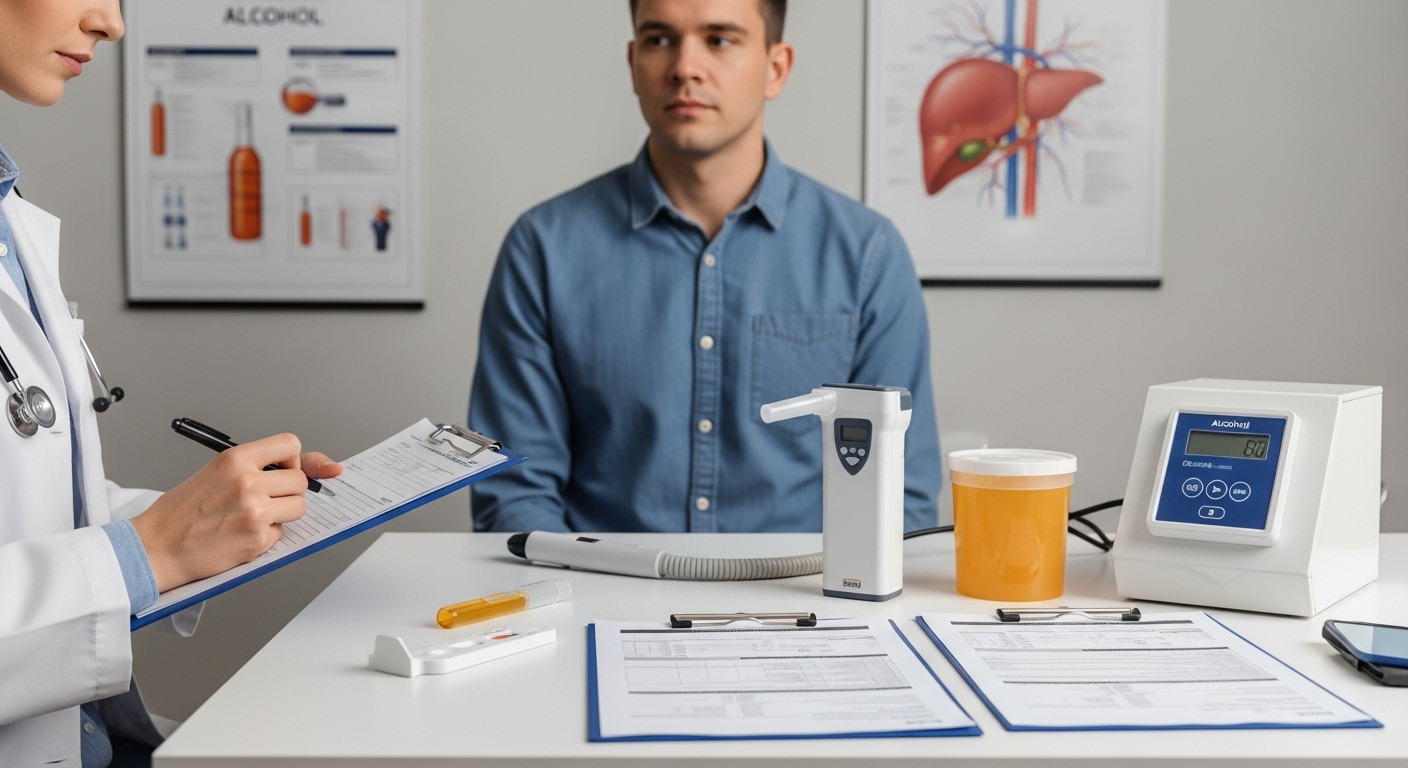
Medical tests play an important role, although they are never conclusive on their own. Typical blood markers such as CDT, GGT or liver values can indicate renewed consumption. Urine tests provide short-term detection. Breath tests are quick but have limitations in accuracy. Results must always be assessed in context.
Medical assessment is therefore essential. Medical monitoring provides external guidance and increases accountability. It also establishes an objective framework for documenting abstinence.
A stable routine greatly helps maintain long-term abstinence. A regular daily rhythm reduces stress and prevents impulsive behaviour. Risk situations should also be deliberately avoided, including places where alcohol is readily available.
Developing new activities improves wellbeing and provides alternatives. Exercise, hobbies or community projects are often helpful. Trusted people can offer motivation and support when needed. This creates an environment that sustains and encourages abstinence.
Strict requirements apply when proof of abstinence is necessary. For the MPU in particular, unannounced urine or hair samples are collected over several months under a defined programme. Urine samples detect a short period of consumption, whereas hair samples document several months.
Participation must be uninterrupted. Every missed test may be treated as a breach. Compliance demonstrates reliability and commitment, ultimately helping build confidence in lasting abstinence.
Abstinence monitoring as a complement to therapy
Abstinence monitoring is an important tool, but does not replace therapy. Addiction has physical, psychological and social components, so comprehensive treatment is needed. Monitoring supports this process by creating accountability and making progress visible.
It also allows relapses to be detected early. Therapy and monitoring therefore work together, increasing the chances of a stable, healthy daily life without alcohol. This combination creates security and supports lasting change.
PEth blood analysis as a specific marker
PEth analysis: modern alcohol abstinence monitoring through a blood test. Alongside urine and hair analysis, PEth blood analysis (phosphatidylethanol) is increasingly becoming established as a reliable method of alcohol abstinence monitoring. PEth is a direct alcohol marker formed at red blood cells and detects even very small amounts of alcohol consumption over a period of up to four weeks.
This method is less susceptible to external influences than hair or urine. For people whose hair cannot be analysed, for example because it is too short or heavily chemically treated, the PEth test provides a reliable, recognised alternative for uninterrupted evidence of the required alcohol abstinence monitoring.
The distinction between EtG and liver markers (GGT, CDT)
EtG versus liver markers: why GGT and CDT are insufficient for abstinence monitoring. Many MPU participants have values such as GGT (gamma-GT), CDT and AST checked by their GP. These indirect alcohol markers can indicate problematic consumption, but are insufficient for official evidence of alcohol abstinence monitoring.
They may also be elevated by conditions such as fatty liver or diabetes and are non-specific. Only direct alcohol markers, namely ethyl glucuronide (EtG) in urine or hair and PEth in blood, are recognised for the MPU under CTU criteria because they specifically measure alcohol-related breakdown products.
Dealing with false positives: EtG pitfalls
Avoiding EtG pitfalls: protecting your alcohol abstinence monitoring. During alcohol abstinence monitoring, particular care is needed to avoid false-positive results. The breakdown product EtG is highly sensitive to even tiny traces of ethanol. This means strictly avoiding alcohol-free beer containing residual alcohol, mouthwash, cough syrups, disinfectants and certain very ripe foods throughout the programme.
Excessive quantities of fruit juice can also dilute urine, resulting in an invalid sample. Obtain comprehensive information beforehand to ensure uninterrupted and successful recognition of your alcohol abstinence monitoring.
Conclusion
Alcohol abstinence monitoring offers guidance, security and transparency. It stabilises abstinence and makes progress visible, providing valuable structure particularly after dependence. It also usefully complements therapeutic measures. Using its different components strengthens the capacity for long-term abstinence, making a permanently alcohol-free life more achievable and better supported.
Sources:
- TÜV SÜD: Proof of Alcohol Abstinence for the MPU
- Labor Enders: Ethyl Glucuronide (EtG), a Marker of Alcohol Consumption and Abstinence
- MPU-Zentrale: The Abstinence Process – Successfully Completing the MPU
FAQ
Is abstinence monitoring always necessary to pass the MPU?
No. Alcohol abstinence monitoring is necessary only where there has been alcohol dependence or severe alcohol misuse, for example above 1.6 per mille. With lower consumption, evidence of controlled drinking may sometimes be sufficient.
What is the minimum duration of abstinence monitoring?
Alcohol abstinence monitoring generally lasts six or twelve months. The driving licence authority determines the exact duration based on the file and individual circumstances.
Which methods are recognised for alcohol abstinence monitoring?
Recognised methods are EtG urine screening, EtG hair analysis of a maximum of 3 cm, and PEth blood analysis. All procedures must take place unpredictably and be carried out through an accredited laboratory under CTU criteria.
Can I choose hair analysis if my hair is dyed or tinted?
No. Hair analysis for alcohol abstinence monitoring is permitted only for untreated hair. Chemical treatments can distort EtG markers, leaving only urine or blood sampling as options.
How much does a 12-month abstinence programme cost?
Total costs typically range from €800 to €1,500, depending on the method and provider. The person being tested must pay the costs of alcohol abstinence monitoring themselves.
What happens if I miss a scheduled testing appointment?
An appointment missed without an accepted excuse is generally treated as a positive finding and leads to termination of alcohol abstinence monitoring. The entire programme must then be restarted to complete the MPU successfully.
How quickly must I provide a urine sample after being notified?
Appointments are arranged at short notice, and you generally have to provide the sample within 24–36 hours of notification. This is intended to prevent manipulation of alcohol abstinence monitoring.
Is alcohol-free beer allowed during abstinence?
No. Most “alcohol-free” drinks contain residual alcohol, up to 0.5% ABV. These small amounts can distort the highly sensitive EtG test and negatively affect alcohol abstinence monitoring.
What is the difference between EtG and PEth?
EtG (ethyl glucuronide) is a breakdown product detectable in urine or hair that indicates alcohol consumption. PEth (phosphatidylethanol) is a direct lipid marker formed in blood that more specifically indicates consumption over longer periods.
When should I start abstinence monitoring?
Begin alcohol abstinence monitoring as soon as you know evidence is required. The period starts only with the first negative screening and must be documented without gaps until the MPU.
