
Alcoholism often develops gradually and goes unnoticed for a long time. Relatives and friends may sense that “something is wrong” but struggle to interpret the behaviour. People affected may hide their addiction by finding reasons for drinking or drinking in secret. Early warning signs matter because recognising them can help interrupt a downward spiral. Understanding typical patterns makes it easier to respond and approach someone with sensitivity, patience and tact.
Key points at a glance
- Early recognition improves the chances of recovery.
- Typical signs include mood swings, irritability and social withdrawal.
- Physical symptoms such as shaking or loss of appetite may also occur.
- Relatives should raise concerns gently but clearly.
- Professional withdrawal treatment is important for safe recovery when dependence is present.
How can alcohol addiction affect behaviour?
Possible signs include mood swings, irritability, aggression, low mood, social withdrawal and increasing unreliability. Physical symptoms may include shaking, sweating, swollen eyelids or alcohol on the breath. More bottles around the home or increased drinking in social situations may also raise concerns. These observations alone do not establish a diagnosis.
The difficulties of recognising alcoholism
Alcohol consumption is considered normal in many social settings. A glass of wine with dinner or a beer after work is rarely questioned. Relatives may therefore struggle to distinguish enjoyment from addiction. People affected may hide or downplay drinking and make excuses. Assessment is especially difficult when drinking occurs only in phases or daily life appears to remain under control.
Some people drink secretly. Symptoms such as irritability or insomnia can also have other causes, so several signs and a professional assessment are needed to identify dependence reliably. The longer problematic drinking continues, the more firmly psychological and physical patterns can become established. Paying attention early helps people access support in time.
Why early recognition matters
The earlier an alcohol problem is recognised, the better the opportunity for treatment. Early addiction can often be addressed with therapeutic support. Many people take a long time to acknowledge the problem, rationalising consumption with statements such as “I only drink to relax” or “That’s normal”.
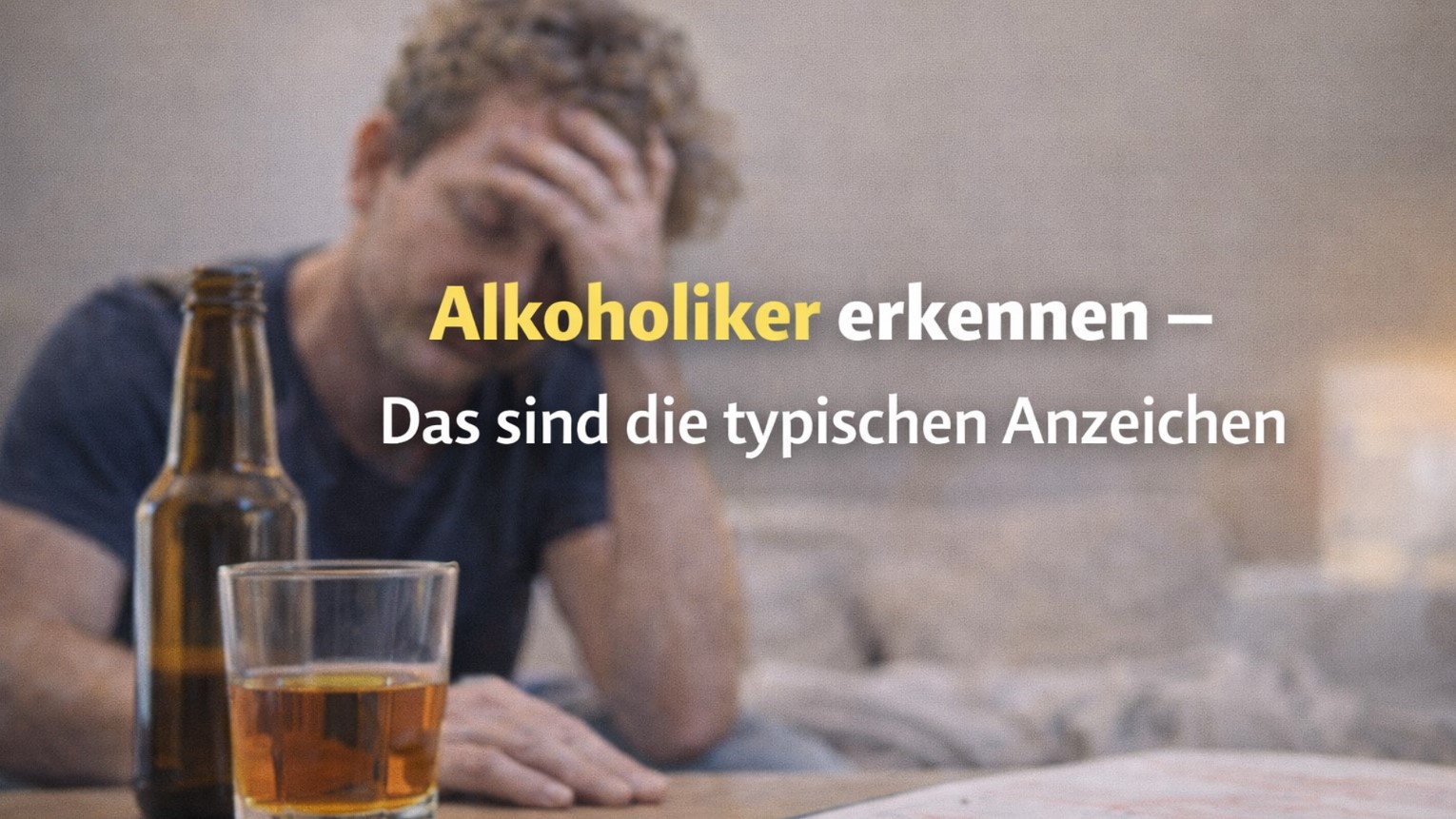
Relatives should remain attentive without immediately judging. Distinguishing risky consumption from socially accepted drinking can be difficult, and the boundaries are not always obvious. Repeated drinking can gradually affect the body and mind. Control over quantity and frequency may be lost. Early action helps prevent these patterns from becoming established and reduces the risk of irreversible harm.
Typical behavioural patterns
Behaviour often changes gradually. Early signs may be subtle: irritability, nervousness and mood swings. Aggression or low mood can follow. Some people withdraw socially or lose interest in family and friends. At work, unreliability, lateness or declining performance may become apparent. Emotional responses can become unusually sensitive or sentimental.
Sudden outbursts or isolation may also occur. Relatives may notice excuses or forgotten appointments. These patterns can develop as alcohol increasingly influences behaviour. Stay attentive to changes without jumping to conclusions: individual symptoms do not prove addiction, and the wider pattern matters.
Common behavioural patterns in alcohol dependence
| Psychological changes | Social changes | Emotional changes |
|---|---|---|
| Low mood | Frequent unreliability | Irritability or aggression |
| Mood swings | Withdrawal from family and friends | Heightened emotional responses |
| Insomnia | Loss of stability at work | Guilt and shame |
Physical signs of alcohol addiction
Physical changes may accompany psychological symptoms. Alcohol can harm the nervous system, liver and heart. Visible signs may include shaking hands or eyelids, loss of appetite and increased sweating. A pale or flushed complexion, red eyes or swollen eyelids may also occur.
Alcohol on the breath may be noticeable; see also bad breath. Facial redness or visible blood vessels, digestive problems and skin conditions may be present, but these findings are not specific to alcohol dependence. In particular, appearance alone cannot establish alcoholism. Relatives who notice a pattern of physical and psychological changes can raise concerns sensitively or seek professional advice.
Physical changes that may accompany alcohol dependence
| Visible symptoms | Internal symptoms | Associated symptoms |
|---|---|---|
| Shaking hands | Digestive problems | Sweating |
| Swollen eyelids | Loss of appetite | Red eyes |
| Facial redness or rosacea | Liver damage | Fatigue and weakness |
Talking about alcoholism with empathy and patience
Raising the subject can be one of the greatest challenges for relatives. Avoid starting the conversation during an argument or in the heat of the moment. Choose a calm time to express concern. Show compassion and support rather than making accusations. Blame or ultimatums often lead to defensiveness and withdrawal.
Describe specific observations, such as increased unreliability or physical changes. If the conversation escalates, seek outside support, for example from addiction counselling services. Relatives should avoid overburdening themselves or taking responsibility for another person’s drinking. The aim is to make recognition and help possible, rather than forcing the person. Understanding, patience and professional support can help create a first step towards recovery.
Personal responsibility: a first step towards recovery
Recognising the illness is important for treatment. Relatives cannot force someone to recover. Acknowledging that drinking has become a problem makes targeted treatment easier. Professional help supports long-term abstinence through detoxification, rehabilitation and psychological care. Abrupt withdrawal at home can be dangerous and potentially life-threatening.
In a treatment facility, withdrawal symptoms can be medically monitored alongside psychological support. Aftercare and relapse prevention help maintain progress. Relatives can support recovery while setting boundaries. Alcoholism is a chronic condition requiring continued attention, but a life without alcohol is possible with treatment, patience and support.
Stages of addiction development: the Jellinek model
The Jellinek model describes a historical framework for understanding progression. In the pre-alcoholic phase, drinking is used to reduce tension. In the early phase, memory gaps or “blackouts” and secret drinking may appear. The critical phase involves loss of control, while withdrawal symptoms such as shaking can occur without alcohol. The chronic phase describes severe disruption of social and working life, drinking becoming the central focus and serious physical harm. Individual experiences do not necessarily follow this sequence.
Serious physical and psychological consequences
Alongside liver cirrhosis, chronic alcohol consumption can lead to other severe conditions. Polyneuropathy can cause abnormal sensations or pain in the feet and legs. Wernicke–Korsakoff syndrome involves serious neurological and memory problems associated with vitamin B1 deficiency. Depression, anxiety disorders and irritability can also substantially affect quality of life for the person and those around them.
Routes out of addiction: professional help and stability
Recognition is followed by treatment. Inpatient care can coordinate detoxification and rehabilitation. Public treatment facilities may have waiting lists, while private facilities may offer earlier admission. Medication can ease withdrawal symptoms under supervision. Psychological treatment addresses the factors underlying drinking. Relapse prevention, behavioural skills and aftercare are central components.
Relatives may also be involved in treatment to address patterns described as codependency. Returning to everyday life requires stability and new routines. Peer-support groups and aftercare can help reduce relapse risk. Professional help and family support can make a stable, abstinent life possible.
Conclusion
Recognising alcoholism can be difficult, but paying attention to behavioural and physical changes creates an opportunity for early support. Relatives can approach the conversation with empathy and seek professional advice. Earlier recognition improves the opportunity for recovery. Sensitivity, patience and courage help make change possible.
Sources:
- Alcohol dependence: symptoms, prevalence and treatment (German)
- Recognising alcoholism: symptoms, consequences and treatment (German)
- Alcoholism and alcohol addiction (German)
FAQ
What are three important signs of alcohol dependence?
A strong urge to drink, loss of control over drinking and physical withdrawal symptoms are important features. Under ICD-10, diagnosis requires at least three of the six dependence criteria to have occurred together during the preceding year. A clinician must assess the complete picture.
How might I recognise secret drinking?
Someone may drink privately or outside their social circle and hide empty bottles. Unexplained mood changes, unreliability and sudden social withdrawal can also raise concern, but do not prove dependence.
Which visible physical signs may accompany chronic drinking?
Facial redness, visible blood vessels, sweating, insomnia and shaking hands may be present. These can have other causes and should not be used to diagnose someone from appearance.
What is codependency and how can it affect families?
The term describes patterns in which relatives try to shield someone from consequences or conceal drinking. This can make the problem harder to address. Relatives deserve support and are not responsible for causing another person’s addiction.
When does alcohol consumption become risky?
The German original cites older thresholds of more than 12 grams of pure alcohol per day for women and 24 grams for men. These are not safe-drinking guarantees, and harm can occur below them. Risky drinking does not necessarily mean dependence, but increases the likelihood of physical and psychological harm.
What does loss of control mean?
It means difficulty deciding when to stop drinking or how much to consume. Someone may plan to have one drink but continue despite that intention.
What are alcohol-related blackouts?
Blackouts are gaps in memory associated with heavy drinking. They occur when alcohol disrupts the formation of new memories and are a serious warning sign.
Which psychological changes can occur early on?
Low mood, irritability and marked mood swings may occur, sometimes alongside aggression. Some people blame external circumstances to justify drinking. These signs also have other possible explanations.
What should I do if I suspect a loved one has an alcohol problem?
Raise your concerns calmly and factually, without accusations, and mention specific support options such as addiction counselling or peer-support groups. Maintain your own boundaries and seek support for yourself as needed.
What serious organ damage can alcohol cause?
Major consequences include fatty liver and cirrhosis, involving liver injury and scarring. Vitamin deficiencies may also contribute to serious neurological conditions such as Wernicke–Korsakoff syndrome.
