

Abstinence monitoring is a clearly regulated procedure. It checks over a defined period whether a person is refraining from alcohol and/or drugs. This provides ongoing monitoring that later serves as a reliable basis for proof of abstinence.
This is particularly important when regaining fitness to drive, for example as part of an MPU. It also plays a central role after addiction treatment or when required by a court or probation conditions. Clear standards, organised procedures and verifiable results are essential.
Key points at a glance
- Abstinence monitoring checks over time that no alcohol and/or drugs are consumed.
- It is ongoing monitoring that prepares the way for later proof of abstinence, for example for an MPU.
- Common methods include forensically secured urine screening and hair analysis, sometimes supplemented by blood markers such as PEth.
- Programmes often run for 6 or 12 months, and in certain cases 15 months.
- Only accredited laboratories or recognised providers supply results that count before authorities or courts.
What is abstinence monitoring?
Abstinence monitoring is a structured procedure that checks over a defined period whether someone is refraining from alcohol and/or drugs. It provides ongoing monitoring and forms the basis for later proof of abstinence, for example for an MPU or after addiction treatment.

What abstinence monitoring involves
Abstinence monitoring is more than a single test. It is a structured process over a longer period, checking that no alcohol and/or drugs are consumed. The aim is ongoing monitoring with clear rules.
This provides certainty because results are documented in a verifiable way. At the same time, it prepares the way for later proof of abstinence. This matters when you need to demonstrate something at a particular point in time, especially for procedures such as an MPU or after addiction treatment.
Direct contact: +49 171 4107688
Get your proof of abstinence here
By EMAIL: Kontakt@Abstinenznachweis.com
Why abstinence monitoring is needed
Abstinence monitoring is used when abstinence must be demonstrated rather than merely claimed. A common aim is regaining fitness to drive, particularly in connection with an MPU.
Monitoring can also be useful after inpatient rehabilitation because it makes stability visible. In some cases, abstinence monitoring forms part of probation conditions. The focus is then on clear requirements and verifiable progress.
It also helps identify relapses early and take corrective action. Progress and development can therefore be tracked over several months.
Core elements of abstinence monitoring
| Core element | Content | Typical examples |
|---|---|---|
| Aim | Checking sustained abstinence | Fitness to drive, after rehabilitation, probation conditions |
| Nature | Ongoing monitoring | Regular documented checks |
| Use of results | Basis for later evidence | Submission for an MPU, to authorities or courts |
Which methods are used?
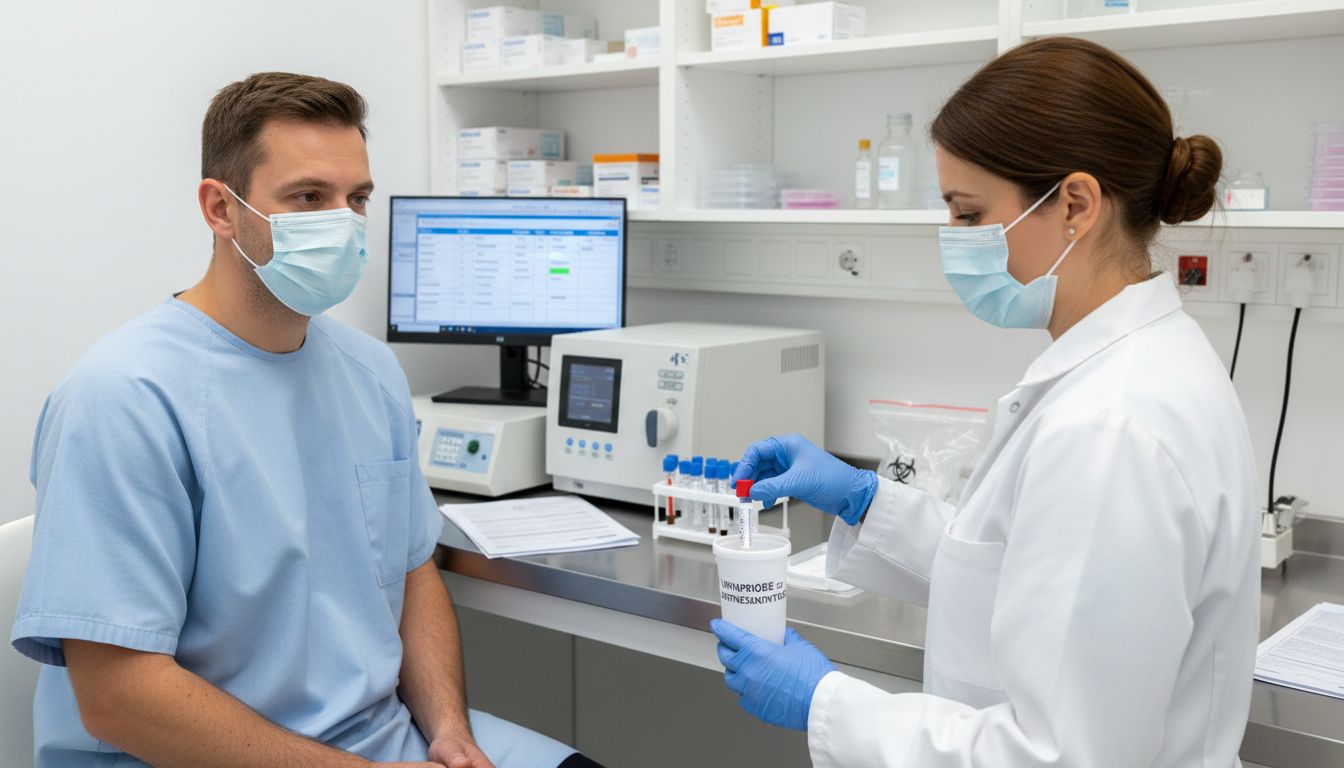
The methods depend on the substance and the question being assessed. Forensically secured urine screenings are very common. They often take place without advance notice so they cannot be planned around. Samples are also generally provided under direct observation to rule out tampering.
Hair analysis is an alternative or additional option because it can cover a longer period. Blood markers are also used in certain situations. A well-known example is PEth, which can indicate alcohol consumption. The important point is that the method must suit the purpose and be properly documented.
Methods at a glance
| Method | Suitable for | Typical feature |
|---|---|---|
| Forensically secured urine screening | Alcohol/drugs depending on the test panel | Unannounced, under direct observation |
| Hair analysis | A longer retrospective period | A stable period, clear sample requirements |
| Blood markers, e.g. PEth | Mainly alcohol-related assessments | Additional testing, depending on circumstances |
How a typical programme works
A monitoring period is established at the outset, often 6 or 12 months. In some circumstances, 15 months are required. Several sampling appointments take place within this period. These may be arranged at short notice to make them unpredictable.
This is precisely what makes ongoing monitoring so informative. Each sample is collected and documented according to fixed rules. At the end, there is a continuous record covering the period. This record can later form the basis for proof of abstinence.
The structure of typical programmes
| Component | What happens | Why it matters |
|---|---|---|
| Monitoring period | 6, 12 or sometimes 15 months are established | A clear framework for the evidence |
| Appointment notifications | Several appointments, some at short notice | Improves evidential value and reduces predictability |
| Sample provision | Collection according to a fixed standard | Comparability and admissibility |
| Documentation | Verifiable records and findings | Basis for later proof of abstinence |
Why recognition and accreditation are crucial
Abstinence monitoring is useful only if it is recognised. Testing must therefore be carried out through accredited laboratories or recognised providers. Otherwise, the results are often not accepted later. This is particularly critical when submitting evidence to public authorities.
Courts also consider formal criteria and admissibility. Recognised providers work to forensically secure standards, making collection, transport and analysis traceable. This protects you because a correctly conducted procedure is less open to challenge. It also protects the assessment by making results more robust.
Common pitfalls and how to avoid them
A typical pitfall is underestimating the monitoring process. Many people think a single test is enough, but the entire period matters. Unsuitable methods are also problematic if they do not address the question being assessed. Using an unrecognised provider is equally serious: the evidence may later be worthless even if every result was “negative”.
Short-notice appointments are another challenge because they require organisation. It is therefore important to be reachable and adapt your routine accordingly. Knowing from the outset whether alcohol, drugs or both are involved also helps. This enables you to choose the appropriate form of monitoring and reduce risks.
Forensic reliability through CTU criteria
What is abstinence monitoring without compliance with the CTU criteria? For findings to be accepted by the driving licence authority, they must meet the strict requirements for chemical-toxicological testing.
These criteria ensure that the sample has not been tampered with and that the analysis is forensically robust. The current fourth edition of the assessment criteria particularly requires continuous documentation and highly specific measurement methods.
Anyone arranging abstinence monitoring should therefore make sure that the institute guarantees these standards. Simple medical certificates without CTU compliance are generally rejected for an MPU.
How short-notice appointments work
A central aspect of “What is abstinence monitoring?” in urine screening is unpredictability. Participants in a monitoring programme must always be prepared to be called in to provide a sample within 24 hours.
This random approach is intended to prevent brief periods of consumption from being concealed by stopping in time. When called in, participants provide the sample under direct observation by trained staff to rule out tampering, such as using someone else’s urine.
These strict arrangements underpin the high credibility of an abstinence programme and require considerable scheduling flexibility from participants throughout the period.
Laboratories accredited to ISO 17025
To understand abstinence monitoring from a legal perspective, you need to understand laboratory accreditation. Only laboratories accredited under DIN EN ISO/IEC 17025 for forensic purposes may analyse samples for MPU-related proof of abstinence.
This certification guarantees that measurement methods are regularly monitored by the state and that results meet the highest quality standards. A private drug test bought online or from a pharmacy usually does not fulfil these criteria.
Before signing an agreement for a monitoring programme, ask for confirmation of the partner laboratory’s accreditation to ensure that your evidence will be officially recognised at the end of the period.
Conclusion
Abstinence monitoring provides a consistent framework when your abstinence needs to count later. It shows over several months whether you consistently refrain from alcohol and/or drugs. Appropriate methods, a clear period and recognised providers are crucial. Together, these turn individual tests into a robust record. Understanding the system helps you plan more confidently and avoid expensive detours. Start correctly, remain consistent and obtain evidence that will genuinely be recognised at the end.
Sources:
- Bußgeldkatalog: Abstinence Monitoring – Procedure, Costs and Duration
- ADAC: Proof of Abstinence as a Requirement for the MPU
- TÜV NORD: Information About the Official Abstinence Check
FAQ
What is abstinence monitoring?
Abstinence monitoring is a structured procedure for demonstrating freedom from drugs or alcohol over a defined period. It usually involves urine screening or hair analysis under forensically secured conditions.
How are appointments arranged in a urine programme?
The participant is asked at short and unpredictable notice, usually by telephone or text message, to provide a sample within 24 hours. This procedure ensures that consumption cannot be concealed by briefly stopping the substance.
What is the difference between hair analysis and urine screening?
Hair analysis allows retrospective evidence over several months, while urine screening covers only the current consumption window. Urine screening also requires short-notice appointments, whereas hair analysis appointments can usually be planned further in advance.
How long does abstinence monitoring generally last?
Depending on the seriousness of the offences and the MPU requirements, a programme usually lasts 6, 12 or even 15 months. The period must be documented continuously for the assessor to recognise it.
What does “direct observation” mean during sample provision?
To rule out tampering such as using another person’s urine, the urine sample must be provided under direct observation by medical staff. This is a mandatory condition for forensic acceptance of the sample.
Can medication influence the result of abstinence monitoring?
Certain medications can produce positive findings, so all preparations taken must be disclosed in advance. A doctor’s prescription is often necessary to establish a medical explanation for a positive finding.
What happens after a positive finding?
A positive finding generally results in immediate termination of the abstinence programme and invalidates the previous evidence. The participant usually has to restart the entire programme.
Who may officially carry out abstinence monitoring?
Only accredited laboratories, forensic medicine institutes or fitness-to-drive assessment centres may perform legally reliable monitoring. Simple certificates from a GP are normally not accepted for an MPU.
How much does participation in abstinence monitoring cost?
Costs vary greatly according to method and duration, but usually range from €150 for a single hair analysis to as much as €800 for a year of screening. These prices include medical sample collection and the forensic report.
Can I go on holiday during abstinence monitoring?
Holidays must be reported to the institute in advance, and there are usually fixed limits on the number of days of absence. During this time, the participant is exempt from short-notice appointments, provided the contractual rules are followed.