

Cocaine and Alcohol: Interactions, Consequences and Treatment Options — this title addresses a serious danger. This combination is not “party-friendly”; it carries major physical and psychological risks. Cocaine can mask alcohol intoxication, leading many people to drink more than they can tolerate. At the same time, the body produces an additional toxic substance that acts for longer.
This increases the risk of overdose, heart problems and loss of control. This article explains the main mechanisms, typical consequences and practical routes out of combined use.
Key points at a glance
- Cocaine and alcohol together have unpredictable effects and significantly increase the risk of serious incidents.
- Cocaine can mask alcohol intoxication, leading people to drink too much.
- The liver forms cocaethylene, which acts for longer and is considered particularly harmful.
- Combined use increases the danger of cardiovascular problems, overheating and collapse.
- Help is available: detoxification, rehabilitation and aftercare are the central components.
Why is combining cocaine and alcohol so dangerous?
Because cocaine often masks alcohol intoxication, encouraging greater alcohol consumption, while cocaethylene also forms. This acts for longer and places greater strain on the heart, circulation and mind.

Combined use: why the effects are so unpredictable
Cocaine is a powerful stimulant, whereas alcohol is a depressant. This contrast is precisely what makes combined use so risky. Many people feel more alert than they really are, while their body is already under considerable strain.
As a result, limits are harder to recognise. Decisions become more impulsive and people take more risks. Drinking often continues because intoxication is less noticeable, significantly increasing the danger of alcohol poisoning.
| Aspect | Cocaine alone | Alcohol alone | Combined use: cocaine and alcohol |
|---|---|---|---|
| Perception | Fatigue is masked | Intoxication becomes noticeable | Alcohol intoxication is often underestimated |
| Behaviour | Stimulation and a “boost” | Disinhibition | Greater risk-taking and less stable emotions |
| Risk | Possible strain on the heart | Possible dehydration and nausea | Unpredictable, with increased poisoning and escalation risks |
Cocaethylene: the toxic metabolite produced in the liver
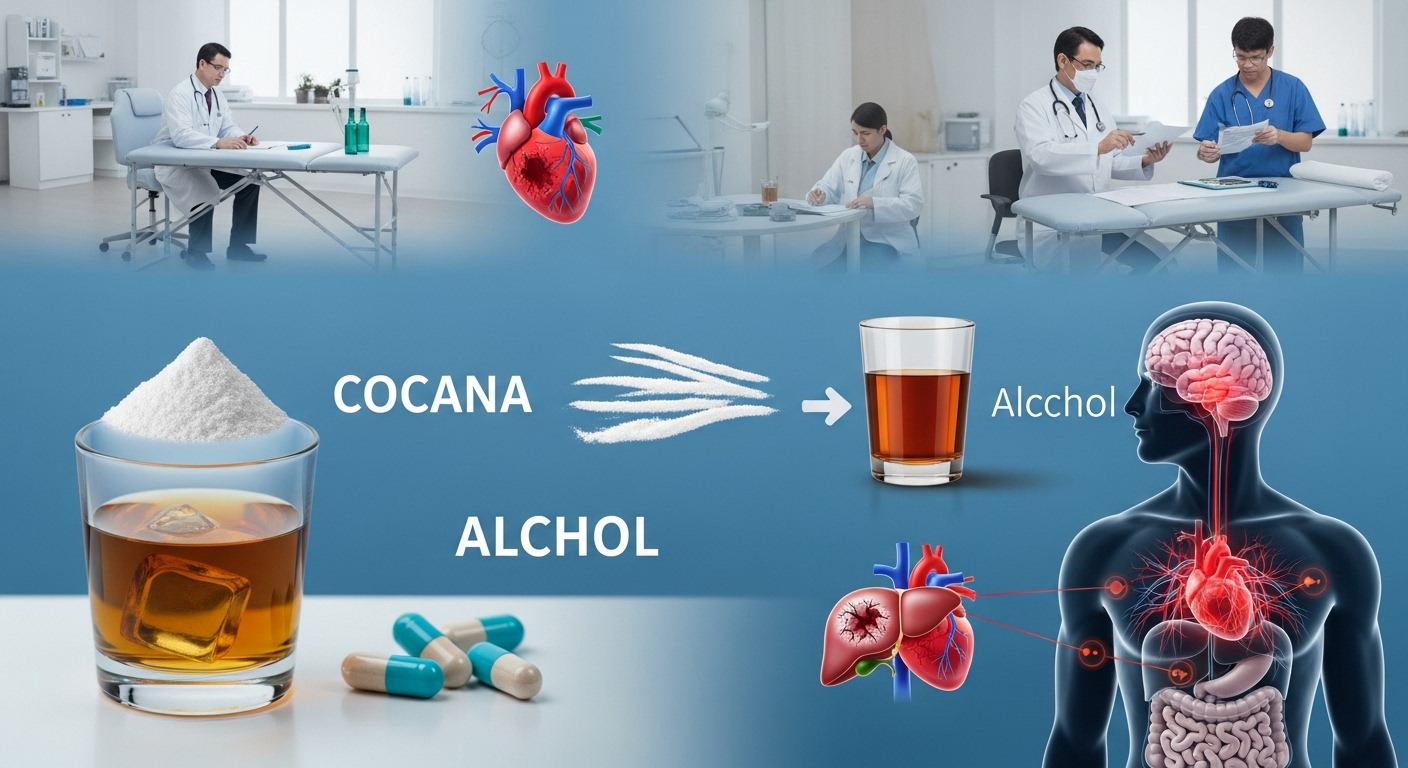
Something crucial happens in the liver when the substances are consumed together. Cocaine and alcohol can form cocaethylene. Its effects resemble cocaine’s, but it frequently remains in the body for longer, prolonging the strain.
This increases the risk of resulting damage. Many people judge only how they feel at the moment, yet processing continues even when they feel “okay”. Cocaethylene is therefore an important reason why this mixture is considered particularly dangerous.
Physical consequences: dehydration, overheating and cardiovascular danger
Both substances can dehydrate the body. Fluid is lost without this being noticed immediately. Cocaine simultaneously increases physical activation, potentially leading to overheating, particularly while partying and dancing.
Lack of sleep worsens the problem. The circulation reaches its limits more quickly. Warning signs are often ignored because people feel “fit”. Nevertheless, collapse, severe heart rhythm disturbances or acute emergencies can occur. The cardiovascular system is particularly vulnerable to this combination.
Psychological consequences: anxiety, depression, psychosis and loss of control
Combined use puts substantial strain on mental health. Mood can change rapidly, with euphoria turning into anxiety. Panic attacks are also possible. Some people experience suspicion, hallucinations or delusion-like thoughts.
Severe cases can involve psychotic states. Impulsivity also increases and conflicts escalate more quickly. Consumption is often followed by emptiness, low mood and guilt. This makes further use more likely and strengthens the cycle.
Addiction potential: how dependence develops and how to recognise it
Cocaine and alcohol both have a high potential for dependence. Together, they often reinforce problematic patterns even faster. Many people enter a cycle of “reward” and crashing. Doses then rise as the effect diminishes, a process known as tolerance.
Withdrawal can cause physical symptoms such as shaking and sleep problems. Strong cravings and irritability occur psychologically. Mood swings and difficulty coping with everyday life are also typical warning signs. Continuing to use despite negative consequences is a clear alarm signal.
| Area | Typical signs |
|---|---|
| Physical | Shaking, sweating and insomnia |
| Psychological | Strong cravings, mood swings and loss of control |
| Emotional | Anxiety, depressive periods and feelings of emptiness |
| Pattern | Tolerance, increasing doses and “I cannot manage without it” |
Treatment and prevention: detoxification, rehabilitation, aftercare and education
Stopping often works best with professional support. The first step is usually detoxification, where acute withdrawal symptoms and physical strain are managed safely. This is followed by rehabilitation, often involving therapy and clear relapse prevention strategies.
The focus is on triggers, stress and new routines. Outpatient aftercare is particularly important: it stabilises everyday life and helps prevent a return to use. Prevention starts with understanding the risks, including education, early conversations and accessible support. Recognising warning signs allows earlier action and can prevent worse outcomes.
The biochemical danger: understanding cocaethylene
A central aspect of cocaine and alcohol: interactions, consequences and treatment options is cocaethylene formation. When both substances are consumed together, the liver converts them into a separate, highly toxic compound. Cocaethylene remains in the bloodstream significantly longer than cocaine alone and places enormous strain on the cardiovascular system.
This interaction drastically increases the risk of sudden cardiac death and severe liver damage. Understanding this is vital for users because the toxic burden is not simply added together; it is amplified by the chemical reaction.
A comprehensive guide must therefore explain this specific metabolite to illustrate the potentially fatal physical consequences of combined use.
Psychological consequences and behavioural changes
The interactions between cocaine and alcohol have substantial effects on mental health. While alcohol lowers inhibitions, cocaine increases confidence and willingness to take risks, often resulting in extreme aggression or complete overestimation of one’s abilities.
Intoxication is frequently followed by a deep emotional “crash”, intensified by combining the substances, which can trigger severe depressive episodes or suicidal thoughts. Over time, combined use encourages anxiety disorders and chronic paranoia.
Anyone seeking treatment options needs to understand that psychological instability in dual dependence is often more complex than in dependence on one substance. Psychological recovery therefore frequently requires specialised therapy addressing both components simultaneously.
Treatment options for dual dependence
When considering treatment options for dependence on cocaine and alcohol, professionally managed withdrawal is essential. Because the consequences of dependence on multiple substances are severe both physically and psychologically, withdrawal should take place in an inpatient setting under medical supervision.
Treatment generally includes detoxification followed by intensive psychotherapy examining the causes of addiction. Learning relapse prevention strategies is particularly important because cravings for this combination are often triggered by environmental cues.
Modern treatment approaches also emphasise social reintegration and self-help groups to support lasting abstinence. A comprehensive treatment plan is the only way to break the cycle of stimulants and depressants sustainably.
How cocaethylene forms and why it is dangerous
A decisive aspect of cocaine and alcohol: interactions, consequences and treatment options is cocaethylene formation. When both substances are consumed simultaneously, the liver synthesises this distinctive metabolite.
Cocaethylene is more toxic than cocaine alone and has a significantly longer half-life in the body. This is highly relevant to the MPU assessment, because mental and physical performance remain impaired for much longer and the risk of unpredictable consequences increases.
Documentation for proof of abstinence often needs to reflect awareness of this prolonged toxic effect to demonstrate a serious examination of past consumption.
Combined cardiovascular effects and danger to life
The physiological interactions between cocaine and alcohol place enormous strain on the heart. While alcohol dilates blood vessels and impairs judgement, cocaine acts as a powerful stimulant that drives blood pressure and heart rate upwards.
These opposing signals cause an extreme shortage of oxygen in the heart muscle. The risk of heart attacks, strokes and sudden cardiac death is many times higher with combined use than with either substance alone.
As part of the treatment options, a cardiac assessment is therefore often needed first to evaluate long-term vascular damage and ensure physical stability for psychotherapy.
Strategies for managing cue reactivity in therapy
Modern addiction therapy places central importance on specific treatment options for people who combine substances, particularly managing “cue reactivity”. Alcohol is a powerful trigger for many cocaine users: drinking a beer often immediately prompts an uncontrollable craving for cocaine.
Successful therapy must separate these behavioural patterns. People need to learn that abstaining from cocaine often also requires avoiding alcohol, because alcohol’s disinhibiting effect biologically predisposes them to relapse.
This profound behavioural change is an essential part of a favourable prognosis for lasting success with proof of abstinence.
Conclusion
Cocaine and alcohol do not “balance each other out”; they dangerously amplify risks. Cocaine masks intoxication, encouraging many people to drink excessive amounts. Cocaethylene adds a longer-lasting effect and further stresses the body. The heart, circulation and mind reach critical states more quickly. If you recognise combined use in yourself or someone else, do not wait. Seek support before it escalates. With detoxification, therapy and aftercare, change is achievable.
Sources:
- Side Effects of Mixing Cocaine and Alcohol
- High Risk of Sudden Cardiac Death When Combining Alcohol and Cocaine
- Cocaine and Alcohol: Effects, Consequences and Treatment
FAQ
Why do many people use cocaine and alcohol together?
Cocaine partly counteracts the perceived effects of alcohol, making users feel “sober” and capable despite high blood alcohol levels. However, this often leads to dangerously large amounts of both substances being consumed, greatly increasing the burden on organs.
What is the most dangerous interaction between cocaine and alcohol?
The most dangerous interaction is cocaethylene formation in the liver. This substance is far more toxic to the heart than cocaine or alcohol alone and greatly increases the risk of strokes, heart attacks and sudden heart failure.
What long-term effects does combined use have on the liver?
Because the liver is overwhelmed by breaking down both toxins while also forming cocaethylene, severe inflammation and cirrhosis may develop. Over time, tissue is permanently damaged, potentially leading to liver failure.
How does the combination affect mental health?
Combined use often intensifies paranoid thoughts, hallucinations and greatly increased aggression towards others. As the effects wear off, people often experience deeper lows and more severe depressive periods than with cocaine alone.
Are there specific treatments for this dual dependence?
Yes. Specialist addiction clinics offer combined withdrawal programmes addressing both physical detoxification and psychological recovery from both substances. Cognitive behavioural therapy is central to breaking the association between the substances in the brain.
Why is withdrawal from cocaine and alcohol more difficult?
Because both substances affect the brain’s reward system differently, cravings during combined withdrawal are often more intense. Two different withdrawal patterns must also frequently be managed together: the physical effects of alcohol withdrawal and the psychological effects of cocaine withdrawal.
How high is the heart attack risk with combined use?
Studies show that combining the drugs can increase the risk of an acute heart attack by up to 25 times compared with the normal state. Cocaethylene-related narrowing of blood vessels and the simultaneous rise in blood pressure place extreme strain on the heart muscle.
Can someone become completely healthy again after years of combined use?
Many physical injuries can partially recover with consistent abstinence and medical treatment, but scarring of the heart or liver often remains. Psychological recovery is a long process, yet many people experience a substantial improvement in quality of life.
What role does relapse prevention play in this form of addiction?
Relapse prevention is crucial because alcohol often acts as a “gateway” substance, lowering inhibitions and triggering renewed cravings for cocaine. People must learn to avoid situations in which they previously combined the substances.
Where can relatives find help if someone misuses cocaine and alcohol?
Relatives can contact addiction counselling services, specialist clinics or self-help groups such as Alcoholics Anonymous or Narcotics Anonymous. Seeking support for themselves is also important to avoid becoming caught in codependency.